
Competition in the gaming market is intensifying, and the familiar glamorous casino brand image is working less and less well as a standalone draw. Full-scale renovations remain an expensive solution, so the industry is increasingly discussing targeted updates that change the impression without a major renovation.
Most land-based casinos really can’t afford renovations because of a noticeable drop in revenues, driven in part by the growing popularity of online casinos. Virtual gaming platforms that don’t need to think about interiors can afford to focus on their game selection. And the variety of games online is higher than in most land-based casinos. Representatives of the site covering the game Monopoly Big Baller, available if you tap here, explain why this matters. The more different games an online casino offers visitors, the longer they stay and the higher their loyalty. Land-based casinos are physically limited and can’t offer that kind of variety. Of course, this leads to declining revenues and forces owners to look for alternatives to costly renovation.
The focus shifts to layout, wayfinding, and guest flow patterns, as well as lighting and sound settings, digital surfaces, and small decorative elements. This set affects comfort, length of stay, and how easy it is for guests to stay engaged in play.
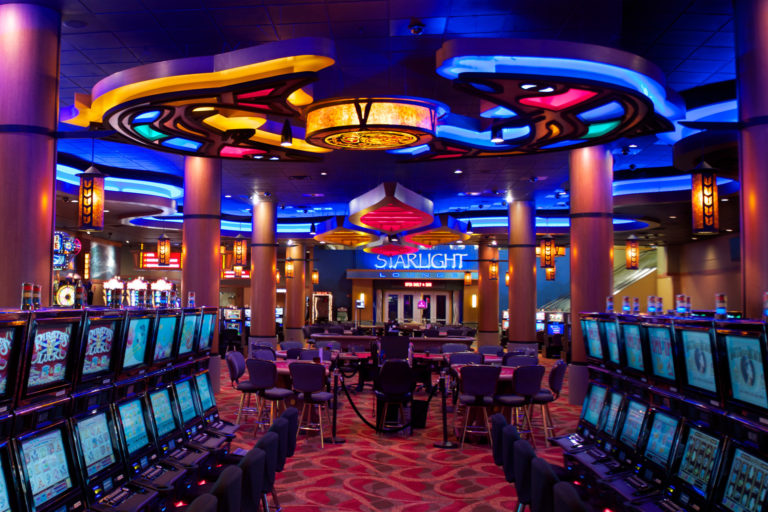
Three common approaches to organizing the casino floor have become established in the industry, and each shapes engagement, movement speed, and the tendency to linger at slot machines and tables in its own way.
These models are rarely found in a pure form, but their principles are evident in the details. In one case, the space nudges guests into constant looping; in another, it creates a sense of resort-like calm; in the third, it gathers people into visible groups, turning crowd interest into a driver of activity.
The maze layout is built on winding aisles and constant visibility of games. Slot machines and tables end up in view from almost any angle, so the path to the exit passes by many temptations that work like a series of last temptations.
The logic is reinforced by downplaying exits and minimizing windows and clocks. When there are few visual time cues, your sense of time blurs, and the gaming routine becomes the main reference point. This technique is often criticized for putting pressure on the guest, but supporters of the approach call it managing foot traffic and attention.
The gaming floor concept emerged as a shift from pressure to emotions. Spacious halls, daylight and skylights, a European aesthetic, and a noticeable emphasis on comfort create the feeling of a well-kept resort rather than an endless gaming corridor.
The goal here is not to confuse the route, but to help the guest relax. In such an atmosphere, the willingness to stay at a table or slot machine lasts longer, and a high level of service is perceived as an invitation to calmer but longer play.
The classic mid-20th-century layout is rows of slot machines and tables that are convenient to service and easy to scale. The drawback shows up in monotony: players are distributed evenly, and emotional highs are less noticeable.
A modern approach more often uses clusters—groups of machines and tables—around which people gather. The psychology is simple: curiosity pulls people toward an event, and a nearby player’s visible win increases the likelihood that an observer will try it too. At the same time, clusters have a weak spot: they require more precise wayfinding and density control, otherwise bottlenecks and noise spill between zones arise.
Casino design usually aims to concentrate attention on play and reduce reasons to step out of the process, while maintaining a sense of comfort. Hence a set of techniques that work not individually, but as a bundled set of cues.
One basic tactic is that time is kept from becoming a distraction. Removing clocks and obvious visual cues makes pauses less noticeable; today, time is more often checked only on personal devices. Another technique: this effect is strongest when a crowd around an area is perceived as a signal of luck and fuels interest.
A separate line is gaming as décor—and opportunities everywhere. The equipment becomes the main visual content, and routes lead from one game to another through the rotation of tables, sightlines, and simple turning nodes. An alternative to adrenaline: luxury and calm, where spacious areas and comfortable places for pauses are provided, supporting a sense of status and the willingness to linger.
Ambient settings are also part of this bundle. Music maintains the tempo, sets the energy, and helps sustain the pace of play with a balance of energy and elegance. Scent is also used as a tool: studies in the 1990s recorded a 45.1% increase in spending in areas with pleasant smells, and signature fragrance blends further support a cohesive brand image and mask unwanted odors.
Even with targeted updates, you still have to balance safety, operational efficiency, guest convenience, and the visual concept. These pillars often pull in different directions; for example, openness of space helps orientation, but complicates acoustics and noise control.
Safety and security start with clear evacuation routes, correct placement of exits, and logical movement of guests and staff. Digital and printed signage, lighting scenes, and acoustic control are important here; they help keep the situation under control, along with surveillance and monitoring infrastructure for critical areas.
Operational efficiency in a casino really does mean money, because system downtime quickly turns into losses. Managed connectivity and monitoring solutions, a centralized control hub, and reliable audiovisual (AV) infrastructure are required. Visitor convenience is supported by accessible restrooms, clear wayfinding and zoning, and well-designed lighting and sound settings that reduce irritation and speed up orientation.
A greener approach is increasingly seen as a way to both improve the experience and reduce energy consumption costs. Energy-efficient lighting fixtures, modern materials, acoustic solutions, as well as LED screens and video walls are used, allowing the visual environment to be updated flexibly without redoing the finishes.
Accessibility can be built into the design through relatively simple measures that broaden the audience and improve overall comfort: