
The speed and safety on the football field today are truly impressive. Just thirty years ago, players were injured more often, and the kit became heavier after rain. Why do modern footballers move faster, and why does their equipment feel almost weightless? The answer lies in the materials that are opening a new era in sports. How have discoveries in materials science changed every detail of the kit, footwear, and gear, influencing the game itself?
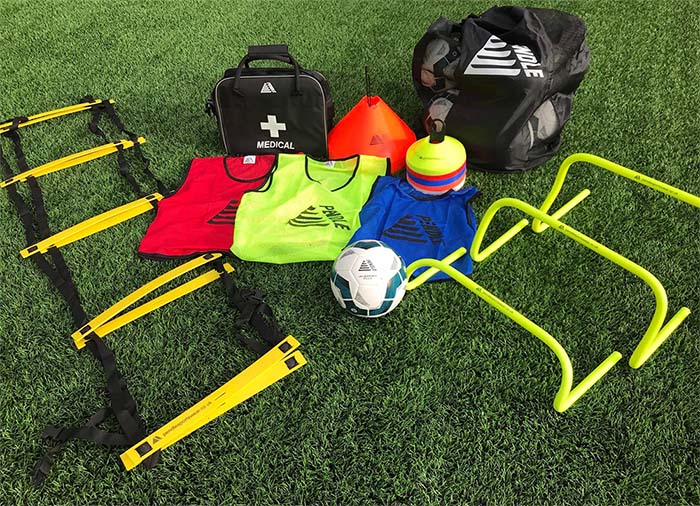
The materials used to create football equipment directly affect the performance and endurance of athletes. It is the properties of fabrics and polymers that determine how comfortable a player feels in extreme weather conditions, how well their body is protected, and how quickly they can move.
In addition to being tested on the football field, the kit must also withstand the application of prints/patches from sponsors, which every major football club now has. We reviewed the list of the best bookmakers on the website www.sportsbettingagents.com.ng and realized that most of them have large, sweeping logos that are difficult to apply and are unlikely to withstand heavy loads. Therefore, the quality of the material must be of the highest standard.
The impact of scientific research on the football industry is hard to overestimate: leading brands invest millions of rubles every year in the development of new materials, as well as conducting tests—from laboratory experiments to field trials during professional team training. Experts note that it is precisely thanks to the scientific approach that sports equipment in recent years has evolved from simple fabrics to high-tech products.
Just a few decades ago, footballers took to the field in cotton shirts and woolen shorts. Natural fabrics quickly became wet and heavy, which restricted mobility. By the early 1990s, leading manufacturers began introducing synthetic materials such as polyester. There were several reasons: polyester is almost twice as light as cotton, and its moisture absorption does not exceed 0.4% of its own weight, whereas cotton can absorb up to 7%. In addition, synthetics are more resistant to tearing and wear, which significantly increases the lifespan of the kit. Research shows that thanks to the transition to synthetic fabrics, the game has become more dynamic and the level of injuries has decreased.
Modern football kit hides complex scientific solutions beneath its colorful design. Special attention is given to moisture-wicking technology—so-called wicking fabrics. Their structure is based on fine hydrophobic fibers that do not absorb moisture but transfer sweat from the skin to the outer surface. The capillary effect allows liquid to evaporate quickly, facilitating the athlete’s thermoregulation. To achieve this, fabrics increase the contact area with the skin and use ultra-fine fibers. In addition to moisture-wicking, kits often use compression panels that fit tightly to the body. They help support muscles, reduce vibration, and lower the risk of microtrauma. For example, the kits of the German and English national teams often contain such elements—their effectiveness has been confirmed in experiments with leading athletes.
The requirements for football boots are not limited to design alone. Traction, lightness, effective cushioning, and protection of the foot from overload become priorities. Modern polymers are used to solve these tasks: the sole is made of thermoplastic materials, inserts of foamed polyurethane, and mesh structures are used for ventilation in the upper. The weight of modern boots rarely exceeds 220 g, which helps reduce fatigue due to less load on the legs. Major brands—Adidas, Nike, Puma—are actively introducing innovations. The use of reinforced fibers and targeted cushioning has reduced the number of foot injuries, as noted in a number of medical studies published in British sports journals.
Goalkeeper gloves are one of the most technologically advanced elements of equipment. They must simultaneously protect the hands, provide a strong grip on the ball, and retain heat in cold weather. For this, multilayer constructions are used: the outer layer of rubber or polyurethane creates a tackiness effect for ball control, the inner layer of latex cushions impacts. Some models are equipped with special inserts to protect the fingers, and the materials allow them to retain some moisture, which is important for thermal insulation. Flexible and reliable gloves are developed with ergonomics and computer modeling in mind. There are ongoing discussions about innovative materials: sports officials are debating whether they provide excessive advantage to some players over others.