
In recent years, the professional community of interior designers has been facing a true technological revolution. Digital tools, which until recently seemed to be the domain of enthusiasts or IT specialists, are now becoming an essential part of everyday practice. The trend for do-it-yourself (DIY) design and the rapid development of artificial intelligence (AI) are changing the structure of demand and client expectations. A logical question arises: how can a professional designer use the potential of AI not only to withstand the advance of automation, but also to strengthen their position in the market?
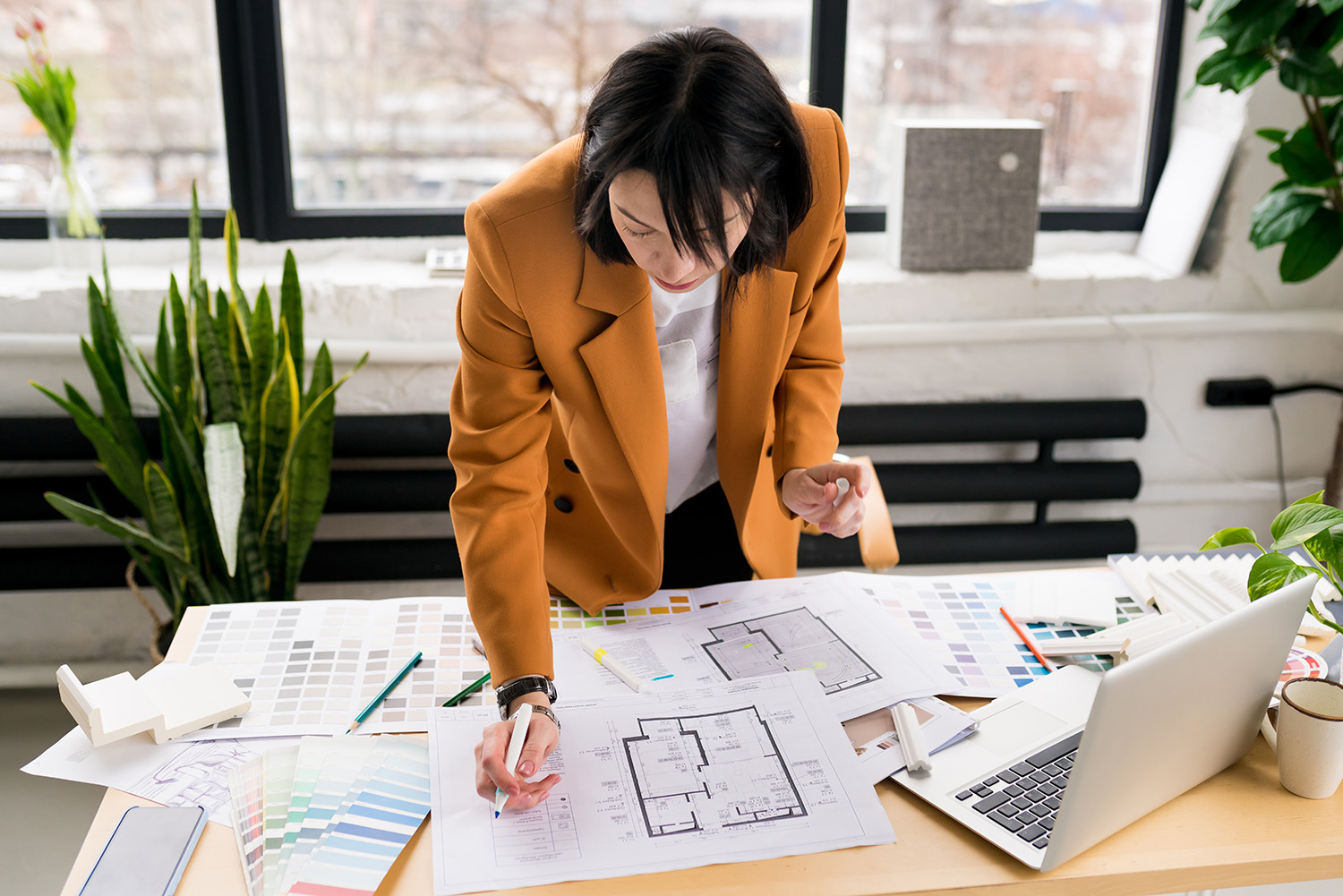
Modern artificial intelligence is a powerful tool that demonstrates high efficiency in solving a wide variety of professional tasks. Artists and designers use it to create visual concepts, scientists and banks use it for building complex forecasts, and programmers use it to write simple code.
Artificial intelligence has become especially widespread in the field of customer service. Modern text and voice chatbots are almost indistinguishable from real support staff. That is why they are chosen in areas where there is a large influx of clients and ordinary people can no longer cope with the growing workload.
Examples of such situations are online services in various fields—from stores to bookmakers. Since the iGaming industry began to actively run promotions and offer bonuses, the number of clients has increased significantly. According to iplbetting.guru, many IPL betting sites use bonuses. Not to mention other, more popular sports. These very bonuses have brought many new clients into the industry. And iGaming brands realized that AI would help them provide effective customer service without the need for significant staff expansion.
And this is just one of many examples where AI not only makes work easier, but also optimizes costs. It is not surprising that the interior design industry is no exception. One could say that the emergence of AI has radically changed this entire field of activity.
Artificial intelligence does not just automate individual tasks, but completely changes the architecture of the design and implementation process for interiors. According to research by the International Union of Architects (UIA), by 2025 more than 60% of firms will use AI for space analysis and modeling. Industry reports from McKinsey note that in 2023 at least 45% of large studios implemented AI solutions for working with materials and visualization.
Experts believe that in the next 5–10 years, AI will become not just an auxiliary, but an integrated member of the team. As designer Anna Fedorova explains, AI acts as a “virtual assistant” capable not only of analyzing large volumes of data, but also of proposing complex project development scenarios. This approach allows architects to devote more time to creativity, build communication with clients, and delegate routine tasks to algorithms.
Today, artificial intelligence takes on many functions in the creation of interiors—from the initial idea to detailed planning. Modern AI applications can:
Thanks to tools such as Midjourney, D5 Render, or Spacemaker AI, a designer can literally in a few minutes explore zoning options for an apartment or office that would have taken days to do manually.
Professional designer Evgenia Kuzmina notes: “AI platforms allow me to quickly test unconventional solutions and see them ‘live’, thus expanding the boundaries of familiar creativity.” As a result, not only is time saved, but a field for experimentation appears, which until recently was inaccessible due to technical limitations.
One of the key advantages of AI is its ability to analyze complex data about materials and their life cycle. The life cycle of a material is the path from its production to disposal, which determines the overall environmental footprint. AI systems evaluate:
Unlike the traditional approach, where the designer has to manually review the characteristics of dozens of materials, AI does this in minutes and suggests the most “green” solutions. For example, the Cove.tool platform integrates databases of environmental certificates and helps select floor coverings with minimal carbon footprint.
In commercial interior projects, AI assistants make it possible to implement “green” technologies even under tight deadlines and budgets. According to the World Green Building Council, such solutions reduce operating costs by 20–25% and improve the quality of the environment for users.
In addition to creative tasks, artificial intelligence is actively used to optimize construction and logistics. Digital services such as Planner 5D and ArchiCAD BIMcloud offer:
Implementing a project with such tools helps significantly reduce construction costs. According to estimates by Boston Consulting Group, the use of AI can reduce the amount of construction waste by almost 30% and decrease risks associated with changes in technical specifications.
Construction management expert Alexey Gromov notes that “AI expands communication between the designer, client, and contractor: everyone sees a unified digital model of the object and can quickly agree on changes.”
With the advent of artificial intelligence, wide horizons have opened up for designers: now it is possible to work with large volumes of information, quickly respond to market demands, and raise project quality to a new level. However, specialists express concerns—automation may reduce the importance of an individual approach and the designer’s signature.
At the same time, many experts are convinced: AI does not replace creativity, but only helps to reveal it more fully. Skeptics fear the depersonalization of the profession, while supporters compare the new toolkit to the advent of computers in graphic design. Can robots replace creative intuition? Or does AI become only a catalyst for the designer’s originality?
Professionals should keep up with trends, master new services, and not be afraid to implement them in their daily practice. It is important not to imitate template solutions, but to look for ways to integrate AI into one’s own methodology, preserving the uniqueness of one’s style.
There are already quite a few useful platforms on the market that help speed up and improve designers’ work. Especially in demand are solutions:
Additional information about the variety of services can be found on specialized portals such as Architizer Tech Directory, or in recent reviews on the DesignBoom website. Beginners should try at least one of the platforms on a real project to appreciate the advantages of modern technologies and understand how AI can enhance the creative component.
Moving from general analysis to practical advice, every professional can choose their own path for mastering new tools, without losing individuality and relevance in a rapidly changing digital world.